

 Customer Login
A1 Exterminators Shares the Three Stages and Why Early Detection Is Critical
From Egg to Infestation
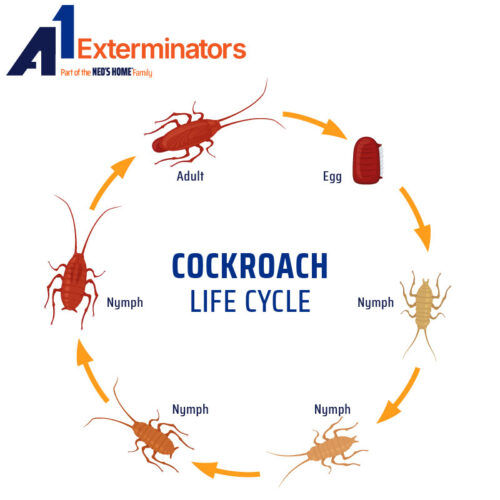
The development of a cockroach follows a simple yet rapid cycle: egg, nymph, and adult. Learning to recognize each stage can help you understand how infestations start—and how to stop them.
Egg Stage
Cockroaches begin their life inside brown, capsule-shaped egg cases called oothecae. Each case holds between 6 and 40 eggs, depending on the species. Measuring about 6 to 9 mm in length, they’re about the size of a grain of rice to a dry bean.
Some species carry these cases until the eggs are ready to hatch, while others hide them in dark, secure locations around your home.
A1 Advice: Don’t step on an egg case. Doing so can release live eggs. It’s best to have a pest control professional safely remove them.
Nymph Stage
Once the eggs hatch, small, wingless roaches called nymphs emerge. They’re light-colored at first—almost white or translucent—but darken with each molt as they grow.
Nymphs shed their skin several times, transitioning through shades of tan, red-brown, and eventually dark brown. Sizes vary from 2 mm (apple seed) to nearly 15 mm (half an inch). This stage can last a few weeks to several years, depending on conditions and species.
Adult Stage
After their final molt, cockroaches reach adulthood. Many species grow wings, though not all are frequent fliers. German cockroaches reach about 1/2 inch in size, while American cockroaches can grow up to 2 inches.
Adults live for several months to two years and reproduce frequently—sometimes every few weeks—allowing populations to grow quickly if untreated.
Why the Life Cycle Matters
Seeing baby roaches (nymphs), molted skins, or egg cases is a red flag. Each stage represents an active infestation and signals it’s time to act.
Call A1 Exterminators today to inspect, treat, and break the cycle before the problem gets worse.
